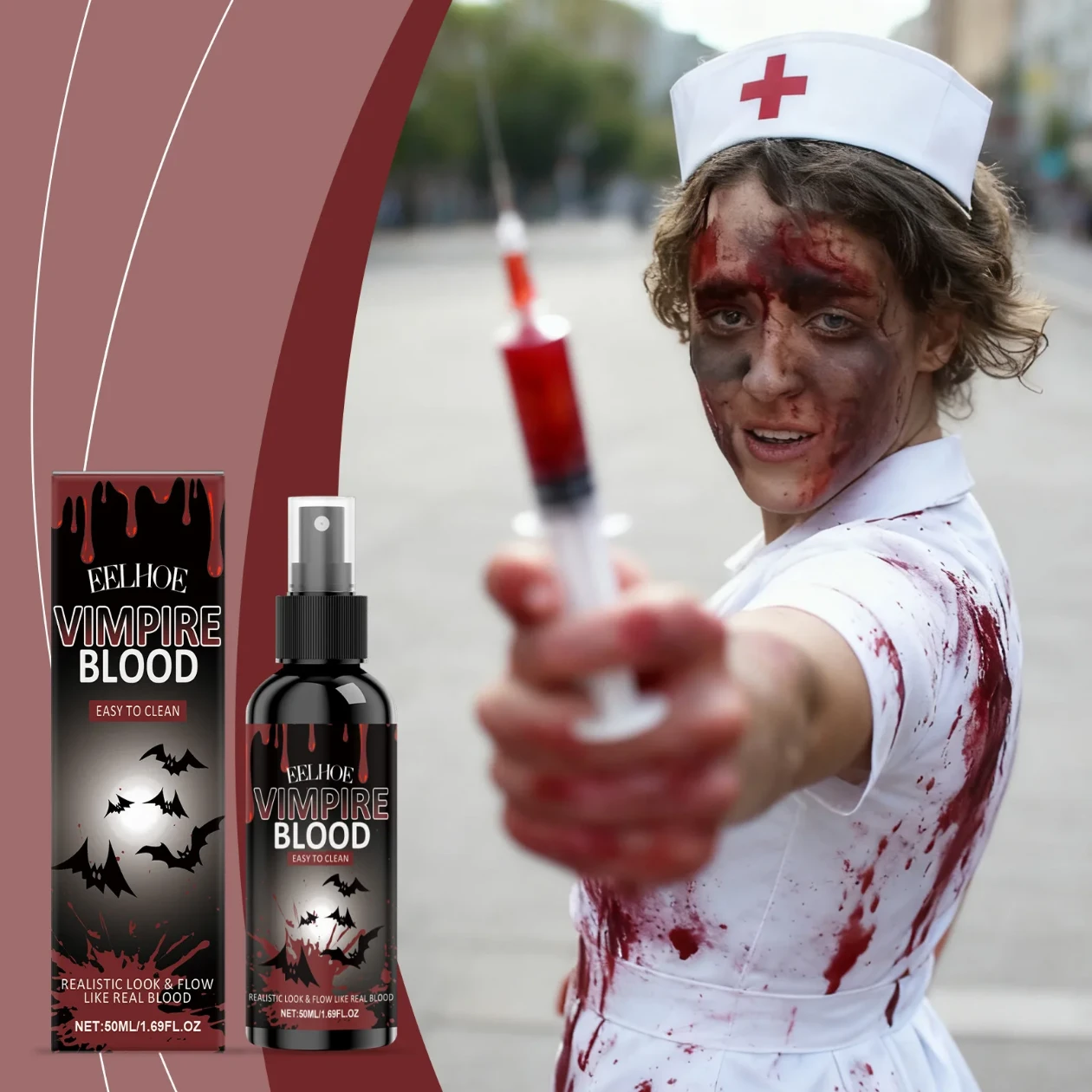
Halloween fake blood makeup is designed to simulate the appearance of a fresh, drying, or old wound and its accompanying blood flow. The goal is to create a visceral, unsettling sense of injury, violence, or supernatural horror that is convincing from a few feet away. It's more than just red liquid; it's about texture, color variation, and context.
Visual & Textural Characteristics:
- Color: Never just pure red. Real blood is a complex hue.
- Fresh Blood: A deep, warm crimson that can have almost a blackish quality in shadows. When very fresh and oxygenated, it may have slight cherry tones.
- Drying Blood: Becomes darker, more burgundy or brownish-red. The edges may crust and turn a rusty brown.
- Old/Stagnant Blood: Very dark, almost black with purple or brown undertones.
- Texture & Consistency:
- Runny: For dripping from the mouth, a wound, or a weapon. It should be viscous enough to cling and run in rivulets, not like water.
- Gelatinous/Clotted: For filling a wound opening. This blood looks thick, sticky, and has body. You can create "clots" within it.
- Caked & Flaky: For dried blood around the edges of a wound, under the nose, or on clothing. Achieved with fake blood mixed with wax, corn syrup dried out, or powdered red/brown eyeshadows.
- Finish:
- Wet Look: Glossy, reflective, and shiny. Essential for making fresh blood look real. Achieved with clear lip gloss, Vaseline, or the inherent sheen of corn syrup-based blood.
- Dull/Matte Look: For blood that has dried completely. No shine, often cracked.
Application & Context is Key:
The blood must tell a story. Its placement and state sell the effect.
- For a Fresh Wound:
- Center: Pool of thick, dark gelatinous blood in the deepest part.
- Edges: Lighter, brighter red (simulating exposed tissue) blending into the skin.
- Trails: Runny blood streaking downward from the wound, following gravity's path. The trails should be thinner and lighter in color as they get longer.
- Spatter: Fine mist or droplets radiating away from the impact point (use a toothbrush to flick).
- For a Vampire/Zombie:
- Mouth: Concentrated at the corners and staining the teeth. Can be mixed with a little black or brown to look less fresh. Drip should come from the lower lip, not the center.
- Chin/Neck: Streaks, not uniform coverage. Might pool in the collarbone.
- Hands: Under the fingernails, in the creases of the knuckles, and smeared.
- For "Just Finished" Violence:
- Weapon Contact: A "transfer pattern" on a knife, bat, or hand that matches the wound.
- Defensive Spatter: On the forearms or palms, as if the victim raised their hands.
Common DIY Fake Blood Recipes & Their "Look":
- Corn Syrup Base: The classic. Mix corn syrup with red food coloring, a drop of blue or green to darken, and optionally chocolate syrup for body and a brownish undertone.
- Best for: Glossy, drippy, fresh blood. Very convincing in photos and from a distance. Sticky and can attract bugs.
- Liquid Latex & Pigment: Mixing blood-colored pigment into liquid latex.
- Best for: Creating realistic, textured scabs and peeled-skin wounds. It becomes part of your skin.
- Wax-Based: Using scar wax or lip balm as a base, mixed with cream makeup.
- Best for: Thick, clotted, custardy blood that sits in a wound cavity.
- Pre-Made Theatrical Blood: (e.g., Ben Nye, Mehron)
- Best for: A reliable, non-sticky, often taste-safe option. Comes in "Fresh," "Scab," and "Dried" varieties.
Pro Tips for Realism:
- Layer It: Start with a darker, thicker base. Add brighter red on top where it might be more oxygenated. Finish with a glossy sealant for wet areas.
- Use Black & Brown: Darkening blood with these colors (using makeup, not just food coloring) adds instant realism and depth.
- Consider the Setting: A zombie's blood should be dark, rotten, and possibly tinged with green or yellow pus. A surgical victim's blood might be brighter, cleaner red.
- Less is Often More: A single, well-executed wound with careful blood trails is more shocking than being covered head-to-toe in red.
In essence, convincing fake blood makeup is a lesson in morbid painting. It observes how real injuries behave and replicates that story through careful color mixing, strategic texture, and intelligent placement.
 english





 Men's fashion
 Women's fashion
 Kid's Fashion
 Health & Beauty
 Home &kitchen
 Baby & Toddler
 Gift & Crafts
 Digital products
 Books & Stationery